



In short: The best strains for hash and rosin are the ones with the largest, most intact trichome heads, which press at a higher yield than fine, fragile resin. Washed-and-pressed favourites include Bubblegum, Hash Plant and Northern Lights. This guide covers what makes a strain press well and the return to expect.
The best strains for rosin are the stickiest ones: Gorilla Glue #4, Girl Scout Cookies, Super Silver Haze, White Widow and Northern Lights. Rosin yield follows resin content rather than THC percentage, so a trichome-heavy plant presses better than a stronger but drier one. The full comparison of hash and rosin strains is below.
Hash has been a prized cannabis concentrate for generations, treasured for its flavour, its potency and its long cultural history. Good hash depends on a lot of things, but one matters more than the rest: what you start with. Some plants produce denser, stickier trichomes and give you a more potent, more flavourful concentrate at the end of it.
This guide covers which strains are worth washing, how to grow them for resin rather than bulk, and how we actually run an extraction here in Quebec, including the numbers we work to and one result that changed how we think about picking material.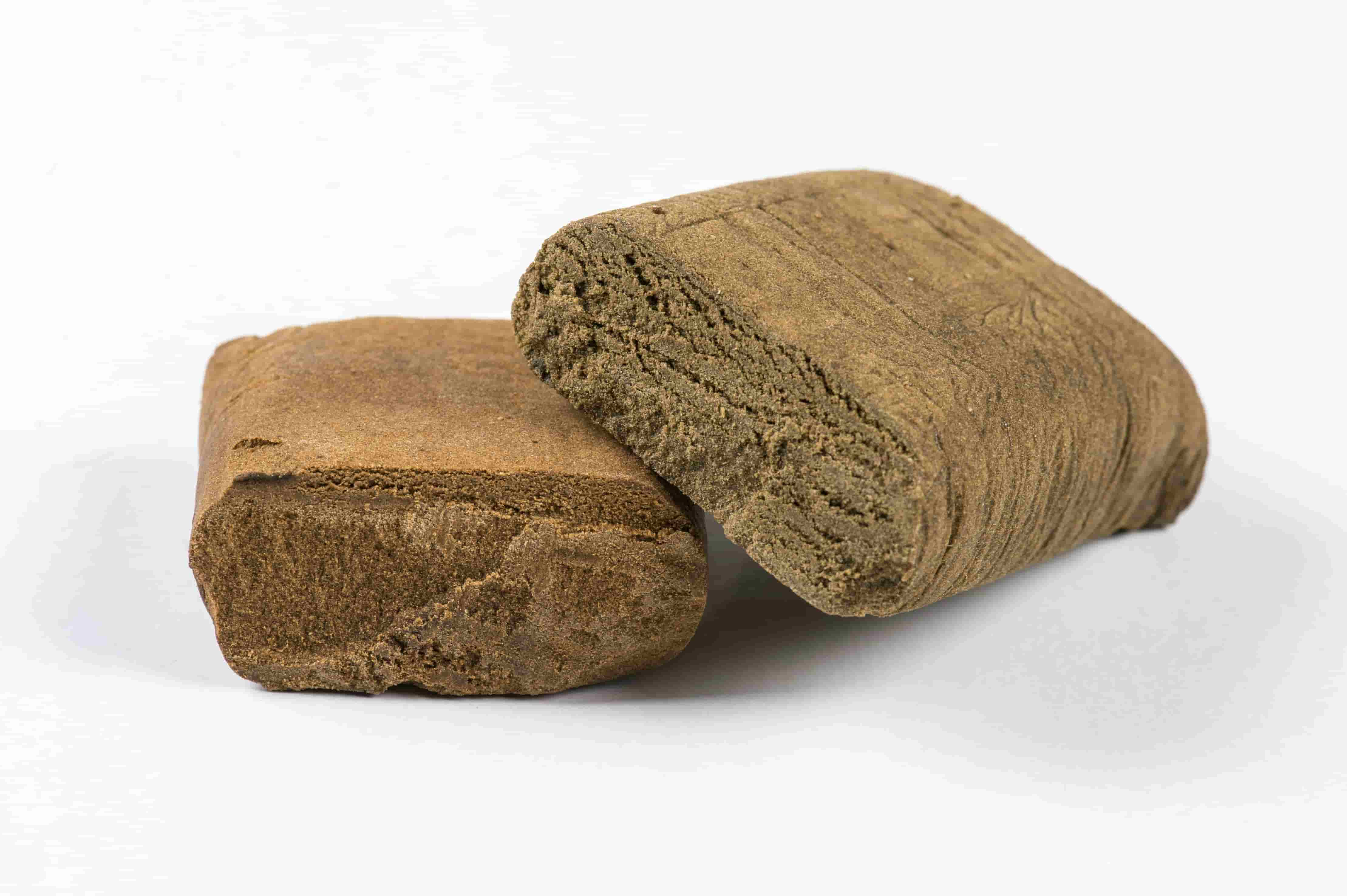
Hash is a concentrated form of cannabis trichomes, the tiny crystal-like glands that hold most of the plant's cannabinoids and aromatic terpenes. Hash-making has evolved from simple hand-rubbing to dry sifting and ice water extraction, but whatever the technique, the quality ceiling is set by the resin you start with.
Trichomes are not just for show. They hold the THC, the CBD and the rest of the cannabinoids. When you make hash you are isolating those glands, which is why the result is far stronger than the flower it came from.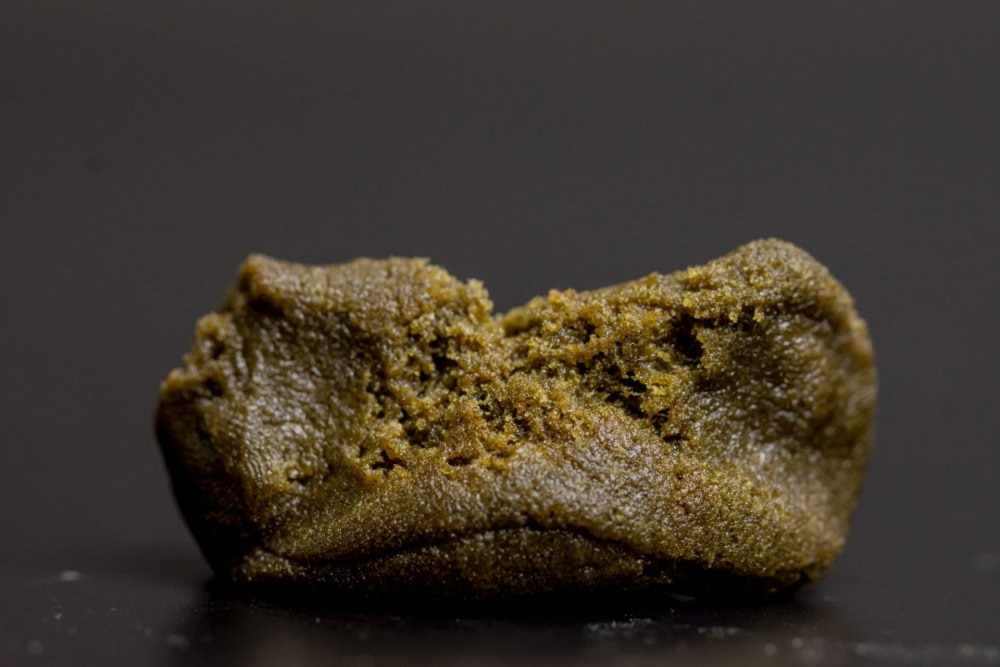
Terpenes give each strain its own flavour and aroma, from the skunky undertones of some indicas to the citrus and pine notes common in sativas. A strong terpene profile makes a real difference to how the finished hash smells and tastes, and some profiles survive extraction better than others.
Genetics do most of the work in determining resin production. Environment and technique can push output up or drag it down, but some lines are simply predisposed to producing more resin than others.
If you have washed before, you know that resin production is the whole game. Three things decide it.
Genetics set the ceiling. A strain's genetic makeup dictates plant structure, flower density and trichome production. Landrace indicas and hybrids bred specifically for concentrates have been prized for generations because of how sticky they finish.
Environment decides whether you reach it. Temperature, humidity and light all matter. Moderate stress, such as slightly cooler night temperatures in late flower, can push resin production up. A plant with the genetics for heavy resin will still underperform in a badly run room.
Harvest timing protects it. Pull too early and the trichomes have not reached peak potency. Pull too late and THC begins converting to CBN, which changes the effect. Most growers target the window where the majority of heads are cloudy with a portion turning amber.
One caveat on all of this, and it is the part most guides leave out: none of it tells you what a given plant will actually return in the bags. More on that below.
Strain | Type | Resin character | Best suited to |
|---|---|---|---|
Afghani | Indica | Thick, heavy, earthy | Dry sift, ice water |
Northern Lights | Indica | Sticky, consistent, forgiving | Any method |
Hash Plant | Indica | Dense, spicy, bred for it | Dry sift, ice water |
Durban Poison | Sativa | Surprisingly resinous, sweet and spicy | Ice water |
Super Silver Haze | Sativa hybrid | Trichome-laden, citrus and earth | Ice water, rosin |
Amnesia Haze | Sativa | Thick coverage, intense citrus | Ice water |
Girl Scout Cookies | Hybrid | Blanketed, dessert-sweet | Ice water, rosin |
Gorilla Glue #4 | Hybrid | Extremely sticky, pine and diesel | Any method |
White Widow | Hybrid | Heavy white crystal coverage | Dry sift, ice water |
Bubble OG | Our own | Strong return, excellent nose | Ice water |
Quebec Blue | Our own | Strong, reliable return | Ice water |
Fruity Pebbles 2.0 | Our own | Grapefruit, survives extraction | Ice water |
Fruity OG Kush | Our own | Grapefruit, survives extraction | Ice water |
Indicas are often synonymous with dense, resin-laden buds, which makes them natural candidates for concentrates.
Afghani. From the mountains of Afghanistan, Afghani has legendary status in the concentrate world. Deep earthy aroma, strongly sedative, compact structure and a thick blanket of trichomes. A reliable producer that rewards the effort of extraction.
Northern Lights. Sweet and spicy, relaxing, and consistently coated in sticky resin. It suits every hash-making method and it is forgiving enough that it is a sensible first wash if you have never done one.
Hash Plant. Bred specifically for resinous buds that excel in extraction. Spicy, almost peppery, with short flowering times and good yields. The name is not marketing.
Indicas get the attention, but certain sativas wash beautifully and give you a concentrate with a far more cerebral, uplifting character. Two of them also feature in our list of the highest-THC sativa strains.
Durban Poison. A pure South African sativa, energising and clear-headed, with a sweet-and-spicy profile. Unusually resinous for a sativa.
Super Silver Haze. A decorated sativa-dominant hybrid with sticky, trichome-heavy buds. The hash comes through with citrus and earth, and it makes excellent daytime material.
Amnesia Haze. Thick trichome coverage and a captivating citrus aroma. The hash carries an intense, almost psychedelic edge, which is either exactly what you want or firmly not.
Hybrids sit in the middle: balanced effects, distinctive flavours and often the best resin output of the lot.
Girl Scout Cookies. A Durban Poison and OG Kush cross with a sweet, dessert-like profile. The buds finish blanketed in resin and the hash is both potent and aromatic.
Gorilla Glue #4. Notorious for buds sticky enough to gum up your scissors during trimming. Pungent pine and diesel, and a high that combines deep relaxation with a cerebral lift.
White Widow. A cornerstone strain for decades, a Brazilian sativa crossed with a South Indian indica, and covered in white crystal. Balanced, neither racy nor sedating.
Growing cannabis for hash asks for slightly different decisions than growing for flower. Even excellent genetics will underdeliver in the wrong conditions.
Start with the right seeds. Look for lines known for heavy trichome coverage rather than headline yield figures. The time, nutrients and electricity you spend are the same either way, so the genetics decide whether that investment turns into resin.
Get the environment right. Indoors, hold temperatures between twenty one and twenty six degrees Celsius, and humidity around forty to fifty percent through flowering. Strong lighting, whether LED or HPS, encourages heavier trichome development.
Feed carefully. Overfeeding damages roots and flattens bud quality, underfeeding stunts growth. In the final weeks many growers taper nutrients off so the plant puts its energy into resin rather than additional plant mass.
Train, but gently. Topping, low stress training and screen of green all increase light exposure across the canopy, and more light on the buds generally means more trichomes. Avoid anything aggressive enough to genuinely stress the plant.
Harvest in the right window. Use a loupe. Aim for mostly milky heads with a portion turning amber. That window gives you high THC alongside the flavour and aroma you want carried into the hash.
Dry and cure properly. Dry slowly in a dark, well ventilated space at roughly fifty percent humidity, then cure in airtight jars, burping them to release moisture. A good cure preserves the delicate terpenes that make the difference between adequate hash and memorable hash. If you are unsure where drying ends and curing begins, see drying vs. curing marijuana.
This is the part most guides rush. It is also the part that decides whether you end up with something you are proud of.
There are three common routes. Dry sifting uses fine mesh screens to separate trichomes from plant material, which is straightforward but needs patience to get real purity. Ice water extraction, or bubble hash, uses ice, water and mesh filter bags, is solvent free, and preserves terpenes well. Rosin pressing applies heat and pressure to flower or hash; it needs a press but avoids solvents entirely. Everything below concerns ice water extraction, which is what we run here.
There is a rule of thumb repeated everywhere: the frostier the trim, the better the wash. Look at the leaves, count the trichomes, and you will know what you are going to pull.
After thirty years of growing and washing, I can tell you it does not hold.
The largest return I have ever seen came from a strain we called SS, simply because nobody could tell us what it actually was. It is an old cultivar and it is long gone now. On the leaf it looked like nothing. With the naked eye you could barely find a trichome on it, and we came close to binning the whole lot rather than waste a wash on it.
We ran it anyway. From a pound of trim we pulled roughly thirteen percent, and the quality was premium. Nothing in that plot that looked better on the leaf came anywhere near it.
That is not a benchmark to chase. Thirteen percent from trim is an outlier and I am not going to pretend otherwise. The point is that the plant which produced it was the one we had already written off.
Most people washing at home are working with trim rather than flower. You finish a crop, you have bags of leaf sitting there, and the temptation is to sort it by eye: the sparkly material goes in the bags, the dull material gets composted.
That sorting costs people material every season. What you can see on a sugar leaf is a poor predictor of what will release in cold water. Trichome heads vary enormously in size and in how readily they break away from the stalk, and neither of those things is visible to the naked eye. A plant can look dull and still be carrying heads that come away cleanly and land exactly in the range your bags are built to catch.
Every strain has its own character in the wash, and that character is not limited to yield. Some give more. Some give a noticeably better colour. Some carry a smell through the wash that you do not get from anything else in the room. Those three qualities do not travel together and they cannot be read off the leaf in advance.
So wash a small test batch of anything before you write it off. A few hundred grams through the bags will tell you more than an hour with a loupe.
Across our own Quebec genetics, a few come back consistently.
Bubble OG and Quebec Blue are the two we reach for on return. Both give a good, reliable yield in the bags, and Bubble OG carries a particularly nice smell through the wash on top of it.
For aroma specifically, Fruity Pebbles 2.0 and Fruity OG Kush are the standouts. Both come through with a distinct grapefruit character in the smell and the taste, and it survives extraction rather than flattening out the way many terpene profiles do.
That split is worth noticing in itself. The heaviest producers and the best smelling are not the same plants, and which matters depends on what you are making.
We run a full eight bag set. From the coarsest down, that is 220, 190, 160, 120, 90, 73, 45 and 25 micron. The 220 is the work bag that holds back plant material, and everything below it sorts resin by the size of the trichome heads.
You do not need all eight to make good hash, but you do need them to find out what your plant is doing. Running the full stack is how you learn where a particular cultivar drops its heads, and that varies between strains more than people expect.
For us the 73 and the 90 are the keepers. Both come out consistently good. The 45 is still perfectly usable. The coarse bags above 120, and the 25 at the bottom, are better thought of as edible material than as anything you would smoke.
In any extraction, heat is the enemy. Everything else follows from that. Warm water softens the resin, it smears rather than breaking away cleanly, and you lose both quality and return.
With ice in the bucket you are realistically looking at around three degrees Celsius. That is about as cold as it gets in practice, and it is cold enough. No clever tricks: ice, cold water and patience.
We run two passes. The first is gentle, roughly ten minutes, stirring the ice and the material together and letting the cold make the heads brittle. That pass takes the resin ready to come away on its own, and it is usually the cleanest material of the run.
The second pass is longer and harder, at least twenty minutes. This is where you work the material properly and pull what the first pass left behind. The return is bigger and the quality is a step down, which is exactly what you would expect.
Keep the two separate rather than combining them. In this house the first pass is the one that stays: it is always that bit nicer, so it goes in the personal jar, and the second pass is what gets handed out to friends. Everyone who washes regularly ends up doing some version of this.
Good hash begins with the right plant. Indica classics like Afghani and Northern Lights, energising sativas like Durban Poison and Super Silver Haze, hybrids like Girl Scout Cookies and Gorilla Glue #4, all offer a different blend of flavour, potency and resin. Our own Bubble OG and Quebec Blue are where we would point you for return, and the two fruity lines for aroma.
But take the SS lesson with you. The plant that looks least promising on the leaf may be the one that surprises you, and the only way to find out is to wash a small batch and see. Try different strains, vary how you grow them, and keep notes on what each one actually gives you in the bags rather than what it looked like beforehand.
Hash is one of the oldest forms of cannabis consumption, and it is still one of the most rewarding to make yourself. A bit of knowledge, a bit of patience, and a willingness to be wrong about which plant was going to win.
What are the best weed strains for rosin?
Gorilla Glue #4, Girl Scout Cookies, Super Silver Haze, White Widow and Northern Lights. All five carry heavy trichome coverage, and rosin yield depends on how much resin a plant produces rather than on its THC figure.
What is the best strain for rosin yield?
Gorilla Glue #4 is the usual first choice. It is extremely sticky and presses well by any method. Girl Scout Cookies runs it close and brings a sweeter terpene profile.
What are the best hash strains?
Afghani, Hash Plant and Northern Lights are the classics, all indicas bred over decades for dense, heavy resin. Hash Plant was bred specifically for it.
Does a higher THC strain make better rosin?
No. Yield tracks resin volume, not potency. A 17% THC strain blanketed in trichomes will out-press a 25% strain with sparse coverage.
Can you press rosin from any strain?
Technically yes, but yields vary enormously. A resinous strain can return two or three times what a dry one gives from the same weight of flower.
What is the difference between hash and rosin?
Hash is resin separated from the plant mechanically, with ice water or by sieving. Rosin is pressed out with heat and pressure. Many growers make hash first and then press that hash into rosin. Our guide to the difference between shatter, rosin and water hash covers it in full.
Should I grow indica or sativa for hash?
Indicas such as Afghani and Hash Plant give thick, heavy resin that suits dry sift and ice water. Resinous sativas such as Super Silver Haze and Amnesia Haze wash well and keep more of their citrus terpenes.
Where can I buy seeds for these strains?
Most are in our catalogue. Search the strain name, or browse the full seed collection.
Disclaimer: The articles and guides on this blog are for educational and informational purposes only. They are not legal, medical or professional advice. Cannabis laws vary by province, territory and country, and you are responsible for knowing and following the rules where you live. Content is intended for adults of legal age. Growing results vary with genetics, environment and experience.