



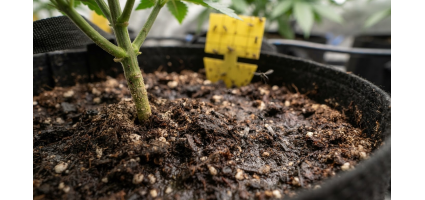
In short: Fungus gnats in cannabis are small black flies that lay eggs in wet topsoil, and their larvae chew seedling roots. Let the top inch of medium dry out, add yellow sticky traps, and treat with BTI mosquito bits. Seedlings are at real risk; mature plants rarely are.
You water your cannabis plant, give it a gentle breeze, and notice a few tiny black flies drifting around the soil surface. They look like fruit flies. You wave them off. A week later, your seedling's lower leaves are yellowing, growth has slowed to a crawl, and the soil surface is crawling with larvae.
That's a fungus gnat infestation, and if you grow cannabis in soil or coco, you'll meet them sooner or later. The good news: fungus gnats are among the easiest cannabis pests to beat — once you understand what they are and why they showed up.
This guide walks through how to identify fungus gnats, the damage they cause, and a proven, low-toxicity plan for getting rid of them and keeping them from coming back.
Fungus gnats are small, dark, mosquito-like flies (about 2–5 mm long) that live and breed in moist growing media. The adults you see buzzing around your pots are mostly a nuisance — they don't bite, and they don't feed on your plants. The real problem lives underground.
Adult fungus gnats lay eggs in the top layer of wet soil or coco. Those eggs hatch into larvae — small, translucent white maggots with shiny black heads — that feed on fungi, decomposing organic matter, and your plant's roots. In heavy infestations, larvae can tunnel into roots and lower stems, opening wounds for pathogens like Pythium (root rot).
The full life cycle — egg, larva, pupa, adult — can complete in as little as 17–25 days at typical grow-room temperatures. That fast turnover is why a few adults on Monday can become a soil teeming with larvae by the following week.
Catch them early and treatment is simple. Miss them, and they'll quietly stunt your plants for weeks. Look for these signs:
Adults
Larvae
Plant damage
If you're not sure whether you're looking at fungus gnats or fruit flies, the giveaway is location: fungus gnats live at the soil surface; fruit flies gather around ripe fruit, drains, and fermenting material.
Fungus gnats aren't random. They show up because conditions invited them. Understanding the cause is half the cure.
Persistent overwatering. Fungus gnat eggs and larvae need constantly moist topsoil to survive. Growers who water on a fixed schedule rather than by pot weight create the perfect breeding ground. If your soil surface never dries between waterings, you're running a fungus gnat nursery.
Rich, organic growing media. Living soil, compost-heavy mixes, and amendments like worm castings and bat guano are fantastic for plant health — but they're also a buffet for the fungi and microbes that fungus gnat larvae feed on. A healthy living soil is, by design, an attractive habitat. MCS's guide to covers how to balance that living ecosystem without creating pest problems.
Imported soil or uncomposted amendments. Bagged soil that's been sitting open outdoors, uncomposted manure, or amendments that haven't fully broken down can introduce fungus gnat eggs directly into your pots. Quality, sealed, properly composted media matters.
Poor airflow at the soil surface. A stagnant canopy of foliage sitting on wet soil traps humidity and creates the still, damp microclimate fungus gnats love.
Outdoor exposure. Outdoor and greenhouse grows are especially vulnerable — fungus gnats are native soil insects, and adults will happily fly in from the surrounding garden. MCS's covers preventative pest management for outdoor and greenhouse grows.
A single method rarely works because fungus gnats reproduce too fast. The proven approach is a layered protocol that targets larvae (the real threat) and adults (the egg-layers) at the same time.
This is the cheapest and most effective first move. Fungus gnat eggs and larvae cannot survive in dry topsoil.
If you can break the wet-surface cycle for a week, you'll kill off a meaningful portion of the next generation before it hatches.
BTi is a naturally occurring soil bacterium that specifically targets fungus gnat and mosquito larvae — it produces a protein that is toxic to their gut lining but harmless to plants, mammals, fish, and beneficial insects. It's the single most effective fungus gnat treatment in cannabis cultivation.
BTi is safe for organic grows, safe around pets, and leaves no residue on buds. There's no pre-harvest interval to worry about.
Yellow sticky traps catch flying adults and serve as both a monitoring tool and a population suppressor. Adult fungus gnats are weak fliers and drawn to yellow.
Sticky traps alone won't end an infestation (larvae keep hatching), but combined with BTi and drier soil, they collapse the adult population and stop new eggs from being laid.
A physical barrier at the soil surface stops adults from laying eggs and emerging larvae from reaching the surface.
If you're running a larger or living-soil grow, biological controls can knock out larvae at scale:
Both are safe for cannabis, leave no residue, and are widely used in commercial living-soil operations. They're more expensive and time-sensitive than BTi, so reserve them for serious or recurring infestations.
A few common "fixes" cause more harm than fungus gnats ever will:
Treatment is temporary; prevention is permanent. Once your infestation is under control:
Choosing a well-aerated growing medium also helps from the start. MCS's guide to the walks through how to select a medium that drains well and resists the constant surface moisture fungus gnats need.
Fungus gnats aren't strain-specific — they're moisture-specific. Any cannabis plant in persistently wet soil can host them. That said, large, dense indica colas and high-moisture living-soil setups tend to create the damp microclimates where gnats thrive.
Genetics won't prevent fungus gnats, but starting with stable, vigorous genetics means your plants are more resilient to the root damage larvae cause. A stunted, root-stressed seedling hit by gnats will recover far more slowly than a healthy plant. Browse the curated autoflower, feminized, and regular collections at to start your next grow with genetics built to handle the bumps along the way — pests included.
Fungus gnats are one of the most common cannabis pests, but they're also one of the most beatable. They don't need harsh chemicals, expensive equipment, or panic — they need dry topsoil, BTi, and yellow sticky traps applied consistently for three to four weeks.
Identify them early, hit the larvae with BTi, dry the surface, trap the adults, and fix the watering habits that invited them. Do that, and your next grow won't be a fungus gnat nursery — it'll be a healthy, productive harvest.
Got fungus gnats on your current grow or planning your next cycle? Start with stable, vigorous genetics from and give your plants the head start they need to shrug off pests and finish strong.
What are fungus gnats?
Small black flies that live in damp growing medium. The adults are a nuisance, but the larvae are the real problem because they feed on fine roots, which hits seedlings hardest.
How do I identify fungus gnats on cannabis?
Small dark flies running across the surface of the medium or rising when you water, along with slow, sickly seedlings. Yellow sticky traps confirm it quickly.
What causes fungus gnats?
Persistently wet topsoil. Overwatering, pots too large for the plant, and medium that holds water at the surface all create the conditions they breed in.
How do I get rid of fungus gnats?
Let the top inch of medium dry between waterings to break the breeding cycle, put up yellow sticky traps to catch the adults, and treat the medium with BTI to kill the larvae.
What is BTI?
Bacillus thuringiensis israelensis, a naturally occurring bacterium that targets the larvae of gnats and mosquitoes. It is applied to the medium and does not harm the plant.
Do fungus gnats kill cannabis plants?
An established plant usually shrugs them off. Seedlings and young clones, which have little root mass to spare, can be stunted or killed.
How do I stop them coming back?
Water less often and more thoroughly, avoid oversized pots, keep a dry surface layer, and check any new plant or bag of medium coming into the space.
Disclaimer: The articles and guides on this blog are for educational and informational purposes only. They are not legal, medical or professional advice. Cannabis laws vary by province, territory and country, and you are responsible for knowing and following the rules where you live. Content is intended for adults of legal age. Growing results vary with genetics, environment and experience.