

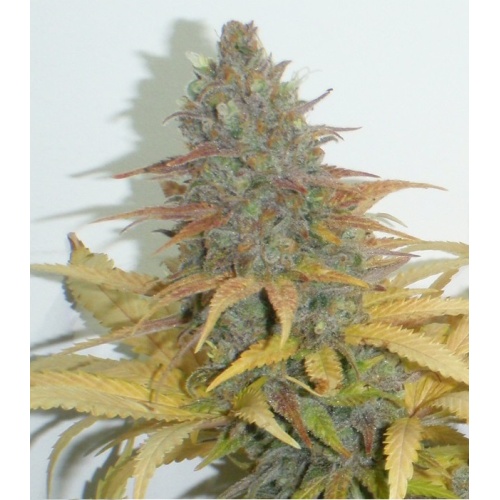


Northern Lights Cannabis Seeds Feminized
Northern Lights is a feminized, mostly Indica strain — one of the most famous Indica lines in cannabis history, believed to trace back to a mix of Afghani and Thai landrace genetics refined over decades of selective breeding, though exact parentage remains uncertain. It tests at high THC (20%+), flowers in 7–8 weeks, stays compact (0–4 ft), and yields up to ~350 g/m² indoors or up to ~450 g per plant outdoors, typically harvesting by mid-October. It suits both indoor and outdoor cultivation, is rated easy to grow, and shows good natural resistance to pests and mold thanks to its dense foliage and resin-rich buds. Reported effect is a classic, deeply relaxing "stone" high.
Genetics
Northern Lights' exact lineage isn't fully documented, but it's widely believed to descend from Afghani and Thai landrace strains, stabilized over many generations into an exceptionally hardy, genetically consistent cultivar known for uniform growth and predictable flowering.
Northern Lights Strain Details
| Detail | Info |
|---|---|
| Type | Indoor / Outdoor |
| Growing Level | Easy |
| Seeds per Pack | 5 |
| Flowering Time | 7–8 weeks |
| Outdoor Harvest | Mid-October |
| Indica / Sativa | Mostly Indica |
| Height | Compact (0–4 ft) |
| Best Outdoor Climate | Continental, Mediterranean, sunny, temperate, warm |
| THC | High (~20%+) |
| Indoor Yield | Up to ~350 g/m² |
| Outdoor Yield | Up to ~450 g/plant |
Flavor, Aroma & Terpenes
Flavor: A robust, earthy base with crisp pine undertones, a strong pungent character reminiscent of traditional hashish, and subtle hints of spice and vanilla.
Key terpenes:
- Myrcene — earthy, musky, sedative and muscle-relaxing
- Pinene — pine, fresh, associated with alertness
- Caryophyllene — spicy, peppery
- Limonene — citrus, lemon, mood-elevating
- Humulene — earthy, woody, associated with appetite suppression
Effects
Commonly reported: deep physical relaxation, mental calm, and a classic sedative "stone" high. Some users note mild creative stimulation early in the experience before it settles into deep relaxation — generally without heavy drowsiness at moderate doses.
Effects vary by person and dose. Not medical advice.
Reported Uses
Some users report the relaxing, calming profile as supportive for stress, difficulty sleeping, or general aches and tension. This reflects general reported use, not medical advice or a treatment claim for any diagnosed condition — consult a healthcare provider before using cannabis for insomnia, chronic pain, anxiety, or any other medical condition.
Growing Conditions & Tips
- Indoor: 20–28°C (68–82°F) daytime with a slight nighttime drop; 40–50% humidity during flowering; 600–800 µmol/m²/s light intensity for optimal bud development.
- Outdoor: Full sunlight and well-draining soil; adequate spacing to maintain airflow and reduce mold risk.
- Nutrients: Higher-nitrogen balanced feed in veg, switching to a phosphorus/potassium-rich bloom formula at flowering.
- Training: LST evens the canopy; topping can encourage multiple secondary colas for higher yield.
Frequently Asked Questions
What is Northern Lights? A feminized, mostly Indica strain believed to descend from Afghani and Thai landraces, famous for its classic, deeply relaxing "stone" high.
How much THC does it have? High — around 20% or more.
How long does it take to flower? 7–8 weeks; outdoors it typically harvests by mid-October.
How tall does it grow? Compact — 0–4 ft.
What's the yield? Up to ~350 g/m² indoors, or up to ~450 g per plant outdoors.
What does it taste like? Earthy and piney, with a pungent, hash-like character and subtle spice and vanilla.
Is it easy to grow? Yes — it's rated easy, with good natural resistance to pests and mold.
Legal Disclaimer
Cannabis laws differ by location. Buyers must know and follow all local, provincial/state, and federal laws before buying, holding, germinating, or growing cannabis seeds. These products are for adults 18+ (or as required by law) only where legal. We do not support or promote illegal activity. THC, flowering time, height, flavor, effects, and yield figures are estimates, not guarantees — actual results depend on the plant, climate, growing setup, and grower experience.
- Availability: 181 In Stock
- Model: Q.C.S.
-
Manufacturer:

