


Feminized Seeds vs Regular Seeds: What’s the Difference (and Which Should You Choose)?
Choosing between feminized seeds and regular seeds is one of the first decisions growers face. The best choice depends on your goal: do you want a straightforward grow focused on flower production, or are you building breeding stock and exploring genetics?
In this guide, we’ll explain the key differences, practical pros and cons, and how to decide which seed type makes sense for your grow style—without hype, exaggerated claims, or confusing jargon.
Related reading: What Are Feminized Cannabis Seeds? and Feminized vs. Regular vs. Autoflowering Marijuana Seeds.
Quick Definition: Feminized Seeds vs Regular Seeds
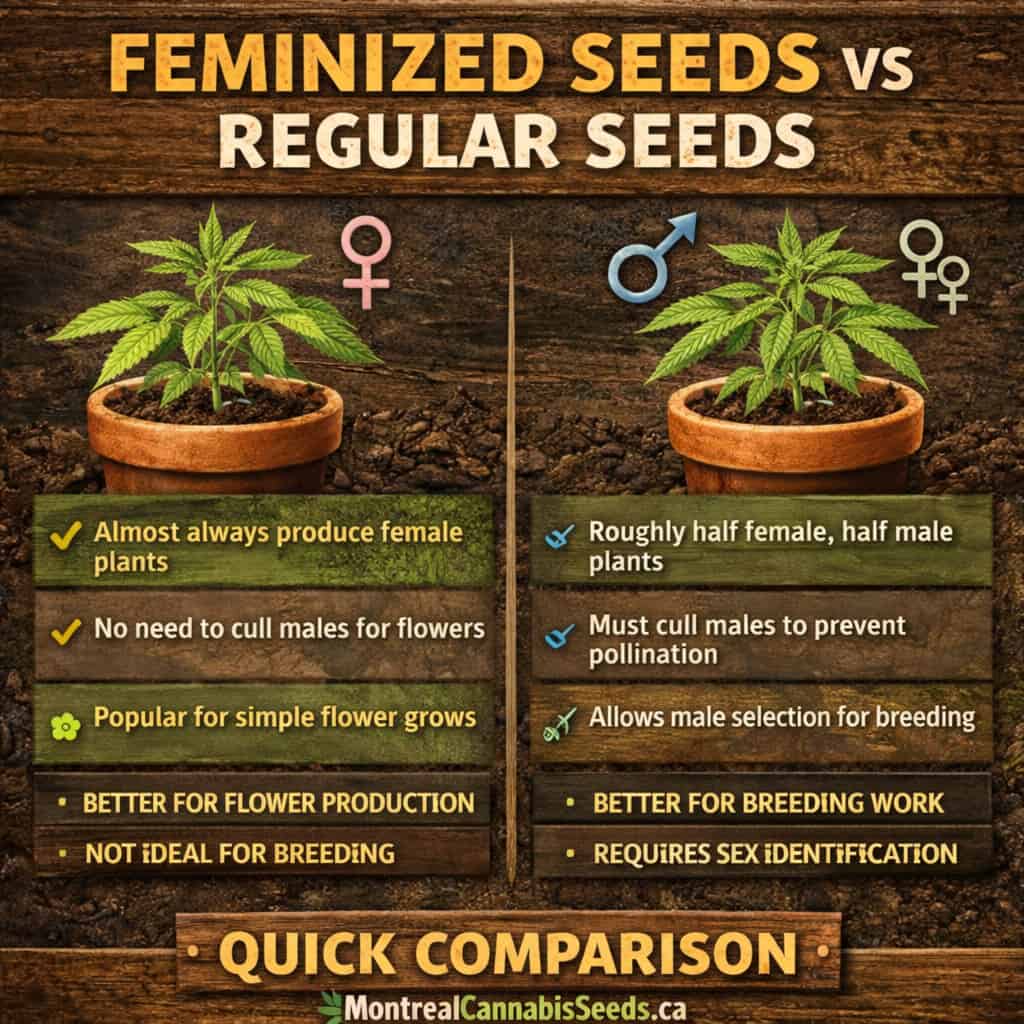
Regular cannabis seeds
Regular seeds can produce either male or female plants. In practical terms, growers often expect a mix (commonly described as roughly half female and half male, though real-world ratios can vary). Regular seeds are the traditional foundation for breeding programs because they can produce true male plants.
Feminized cannabis seeds
Feminized seeds are bred to produce female plants at a very high rate. They’re popular for flower-focused grows because they reduce the need to identify and remove male plants. Many mainstream seed resources describe feminized seeds as being designed specifically to maximize the chance of female plants.
How Feminized Seeds Are Made (High-Level, Educational)
Feminized seeds are created by using pollen that comes from a genetically female plant. In commercial production, a common approach is to induce male flowers on a female plant using an ethylene-inhibiting treatment (often discussed in the scientific literature for hemp/cannabis). The resulting pollen is then used to pollinate another female plant, producing seeds that are strongly female-biased.
Note: This article is not a step-by-step “how-to.” It’s a high-level explanation so buyers understand the concept and terminology.
Pros of Feminized Seeds
1) More efficient use of space and time
If your goal is flower production, feminized seeds can be more efficient because you’re less likely to spend time and space raising plants that later turn out to be male.
2) Simpler workflow for most growers
Many growers prefer feminized seeds because they simplify planning. You can run fewer plants and still expect a full canopy of female plants.
3) Great fit for beginners (when genetics are reputable)
For newer growers, feminized seeds reduce one big learning curve: identifying sex early and managing male removal. If you’re just getting started from seed, don’t miss: The Ultimate Guide to Germinating Your Cannabis Seeds.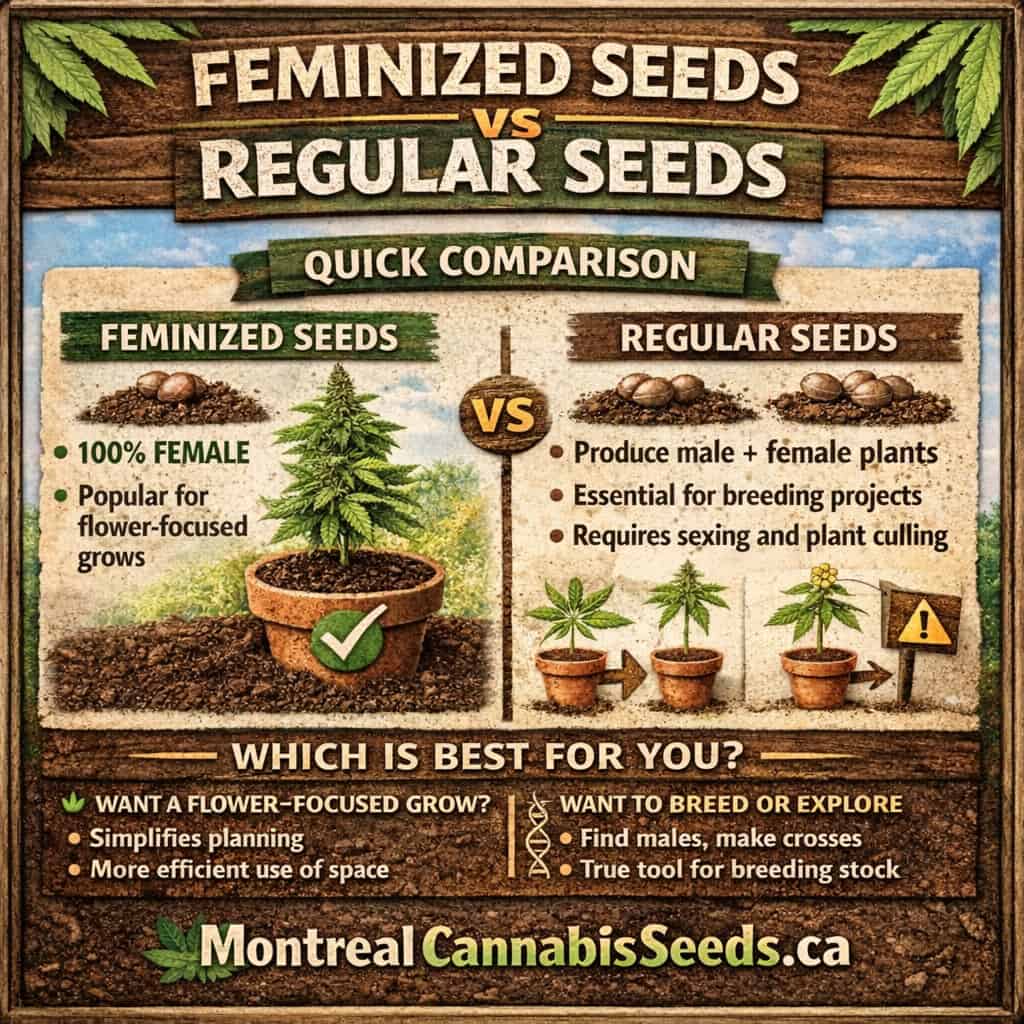
Cons and Considerations of Feminized Seeds
1) Not ideal if you want true males for breeding
If you’re doing traditional breeding (selecting males and females, making crosses, preserving lines), regular seeds are usually the better tool because you can select strong male plants.
2) Stability still matters (genetics + stress)
One common concern is intersex expression (“herming”). Any cannabis plant can show intersex traits under stress (light leaks, heat swings, inconsistent cycles). With feminized seeds, quality depends heavily on breeder selection and stability testing. The “feminized” label alone doesn’t guarantee perfection.
If you’re diagnosing symptoms that look like nutrient stress or environmental imbalance, this can help: A Comprehensive Guide to Cannabis Deficiencies.
Pros of Regular Seeds
1) Best choice for breeding and long-term selection
Regular seeds allow you to select both males and females. If your goal is to build or preserve genetics, regular seeds are the classic starting point.
2) Wider selection for phenotype hunting
Many growers who enjoy exploring variation prefer regular seeds for hunting unique expressions and building mother plants.
3) Useful for growers who want to make their own seeds (responsibly)
Regular seeds provide access to true males, which is essential for classic breeding workflows. If you’re strictly growing for flower production and don’t want pollen risk, feminized seeds are usually the easier route.
Cons and Considerations of Regular Seeds
1) You’ll likely need to remove males
In most flower-focused grows, males are removed to avoid pollination. That means time, space, and attention spent on plants you might not keep.
2) Requires sex identification and careful timing
Regular seeds ask more of the grower: identifying preflowers, staying organized, and preventing accidental pollination. If your goal is a simpler run, feminized seeds are usually more beginner-friendly.
Which Should You Choose? Practical Scenarios
Choose feminized seeds if:
- You want a straightforward grow focused on flower production
- You have limited space and don’t want to cull males
- You’re newer and want fewer variables early on
Choose regular seeds if:
- You plan to breed or make classic crosses using true males
- You enjoy phenotype hunting and long-term selection
- You want maximum genetic “tooling” (males + females)
What About Autoflowers?
Autoflowers are a separate category because they flower based on age rather than light cycle. Some autoflowers are feminized, some are regular. If you want the full comparison, use: Feminized vs. Regular vs. Autoflowering Marijuana Seeds.
You may also like: Are Autoflowering Seeds Always Female?.
Buying Tips: How to Judge Seed Quality (Without Hype)
- Look for clarity and realism: avoid “miracle seed” promises.
- Match the seed type to your goal: flower production vs breeding.
- Plan your workflow: regular seeds require sexing and organization.
- Protect your seed investment: proper storage matters. See: The Definitive Guide to Keeping Your Cannabis Seeds Fresh.
Thoughts
Feminized seeds are usually the best choice for growers who want a simpler, flower-focused run with fewer surprises. Regular seeds are the better tool for breeding, selection, and long-term genetic work. There’s no universal “best” seed type— it’s about choosing what fits your goal and your setup.
For more cultivation education, browse: Growing Cannabis (Blog Category).
Legal Disclaimer: Cannabis laws vary by jurisdiction. It is the buyer’s responsibility to know and follow all local, provincial/state, and federal laws. These products are intended for adult customers (18+ or as required by law) where permitted. We do not encourage or promote any illegal activity.