


Organic Soil for Cannabis: What It Is, Why It Works, and How to Choose the Best Mix
Organic soil is one of the most popular ways to grow cannabis because it focuses on building a healthy root zone first: good structure, balanced moisture, and a living microbial ecosystem that helps make nutrients available over time. Done right, organic soil can be forgiving, stable, and easier to manage than constantly chasing feeding schedules.
If you’re starting from seed, pair this post with: The Ultimate Guide to Germinating Your Cannabis Seeds.
What “Organic Soil” Means (and What It Doesn’t)
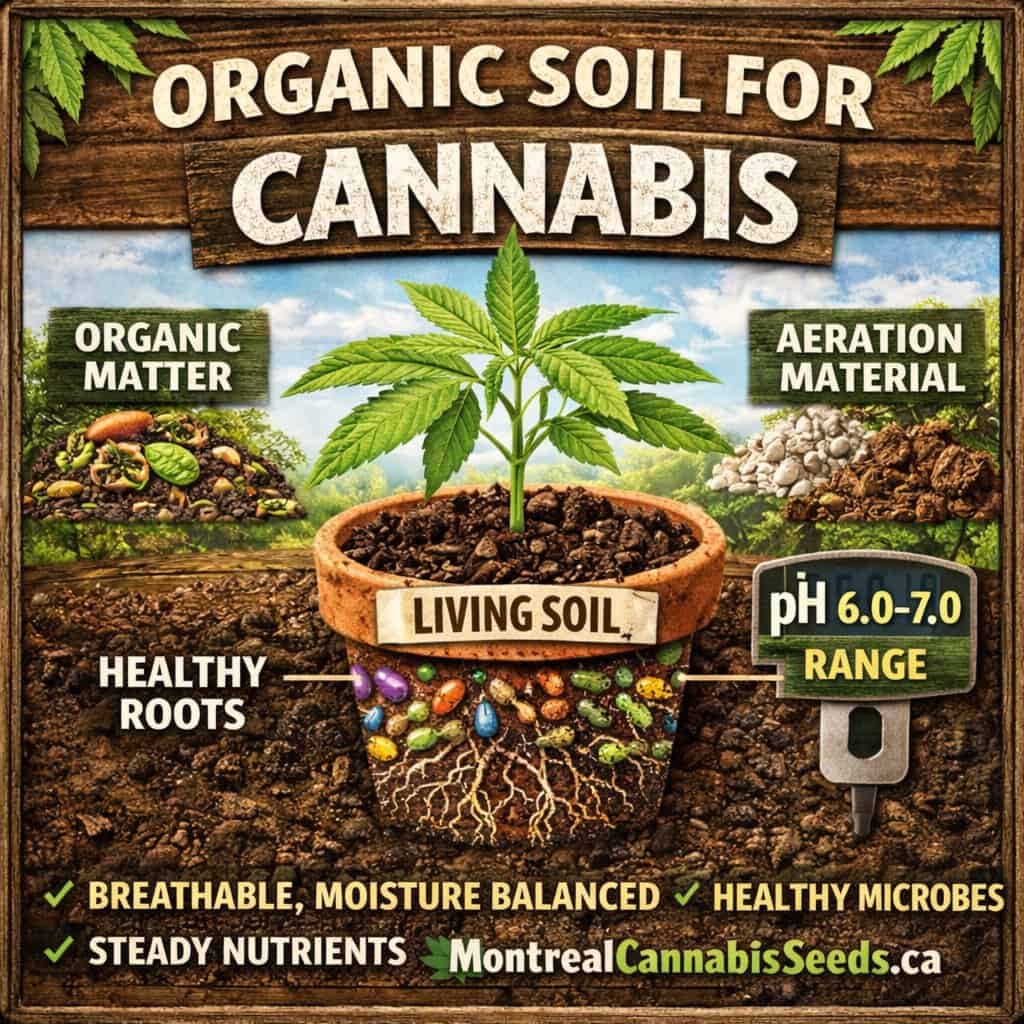
In plain terms, organic soil is a growing medium built around organic inputs (like compost and natural amendments) plus the biology that helps break them down into plant-available forms. You’ll often hear the term living soil—that usually means the soil is treated like an ecosystem, not just a container of dirt.
Organic doesn’t automatically mean “stronger” or “better.” It means the system relies more on biology and slow-release nutrient cycling than quick synthetic feeds. The real goal is balanced soil conditions that keep roots healthy and nutrient uptake steady.
Why Organic Matter Is a Big Deal
Organic matter supports the physical, chemical, and biological functions of soil. In practical terms, it helps with: moisture handling, soil structure, nutrient cycling, and microbial activity. That matters because healthy soils tend to hold water better, drain more reliably, and stay more resilient through environmental swings.
The 4 “Must-Haves” of Organic Soil for Cannabis
1) Airy structure + reliable drainage
Roots need oxygen. Dense, compact soil stays wet and can choke root growth. A quality organic mix should feel light and crumbly, not heavy or muddy. In containers, this is even more important—drainage and aeration are the safety rails.
2) Moisture retention (without staying soggy)
The best organic mixes hold enough moisture to prevent constant dry-down, but still allow air pockets for roots. The goal is stable hydration, not saturated soil.
3) Active biology (microbes do the “conversion” work)
In organic systems, microbes help convert organic inputs into forms plants can use. This is one reason organic soil can feel steadier: nutrients tend to release more gradually compared to fast, high-swing feeding.
4) pH in a healthy range
pH affects nutrient availability and microbial activity. Many plants perform best when soil pH is roughly in the 6–7 range, which supports nutrient availability. Keeping pH reasonable helps reduce “mystery deficiencies” caused by nutrient lockout.
If you’re troubleshooting leaf symptoms, this internal guide helps connect the dots: A Comprehensive Guide to Cannabis Deficiencies.
Common Ingredients in a Quality Organic Potting Mix
Many organic potting mixes are built from three functional parts: a moisture-holding base, a biological/fertility component, and an aeration component. You’ll see variations, but the “jobs” are consistent.
Base (structure + moisture control)
- Peat moss or coco coir (often used as the main base)
Biology + fertility
- Compost (adds organic matter, structure support, and biology)
- Worm castings (often used as a gentle organic input and microbial support)
Aeration (keeps soil from compacting)
- Perlite or similar aeration material (helps drainage and oxygen flow)
- Vermiculite (often used when extra moisture retention is needed)
You’ll also see mineral and organic amendments (varies by brand and approach). The key is not “how many ingredients,” but whether the soil stays breathable, stable, and not overly hot for early growth.
Living Soil vs “Organic Potting Soil”: What’s the Difference?
Think of it like this:
- Organic potting soil is an organic-based mix that can perform well out of the bag. Some are lightly amended; some are richer.
- Living soil is more about how you manage it over time—maintaining biology, avoiding harsh resets, and keeping the soil ecosystem functioning between runs (where applicable).
Either approach can work. The best choice is the one that matches your grow style and how much hands-on soil management you actually want to do.
Indoor vs Outdoor Organic Soil
Indoor (containers)
- Prioritize aeration and drainage: containers punish heavy soil
- Consistency matters: a stable mix is easier to repeat successfully
- Overwatering is common: breathable soil helps reduce mistakes
Outdoor (Canada-specific reality check)
- Native soil can vary wildly by region and yard conditions
- Compost can improve structure and water handling in weak soils
- Weather swings make drainage and root health a top priority
For more related reads, browse: Growing Cannabis (Blog Category).
Quick Checklist: How to Pick a Good Organic Soil
- ✅ Light, airy feel (not dense or muddy)
- ✅ Drains well, but doesn’t dry out instantly
- ✅ Contains organic matter (compost-based or similar)
- ✅ Includes aeration material (perlite/other)
- ✅ pH sits in a sensible plant-friendly range
Final Thoughts
Organic soil for cannabis works best when it supports roots first: structure, aeration, moisture balance, and active biology. If your mix stays breathable and stable, your plants have a better chance of staying healthy and consistent from early growth through flowering.
Want to keep your seeds fresh while you plan your next grow? The Definitive Guide to Keeping Your Cannabis Seeds Fresh.
Legal Disclaimer: Cannabis laws vary by jurisdiction. It is the buyer’s responsibility to know and follow all local, provincial/state, and federal laws. These products are intended for adult customers (18+ or as required by law) where permitted. We do not encourage or promote any illegal activity.