


Best Soil for Cannabis: What Type of Soil Cannabis Grows In Best
Soil is more than “dirt.” It’s the living foundation that controls root health, nutrient availability, and how forgiving your grow will be. If you want consistent results, start by choosing a medium that supports strong roots: airy structure, reliable drainage, balanced nutrition, and the right pH range.
The Best Soil for Cannabis: What You’re Really Looking For
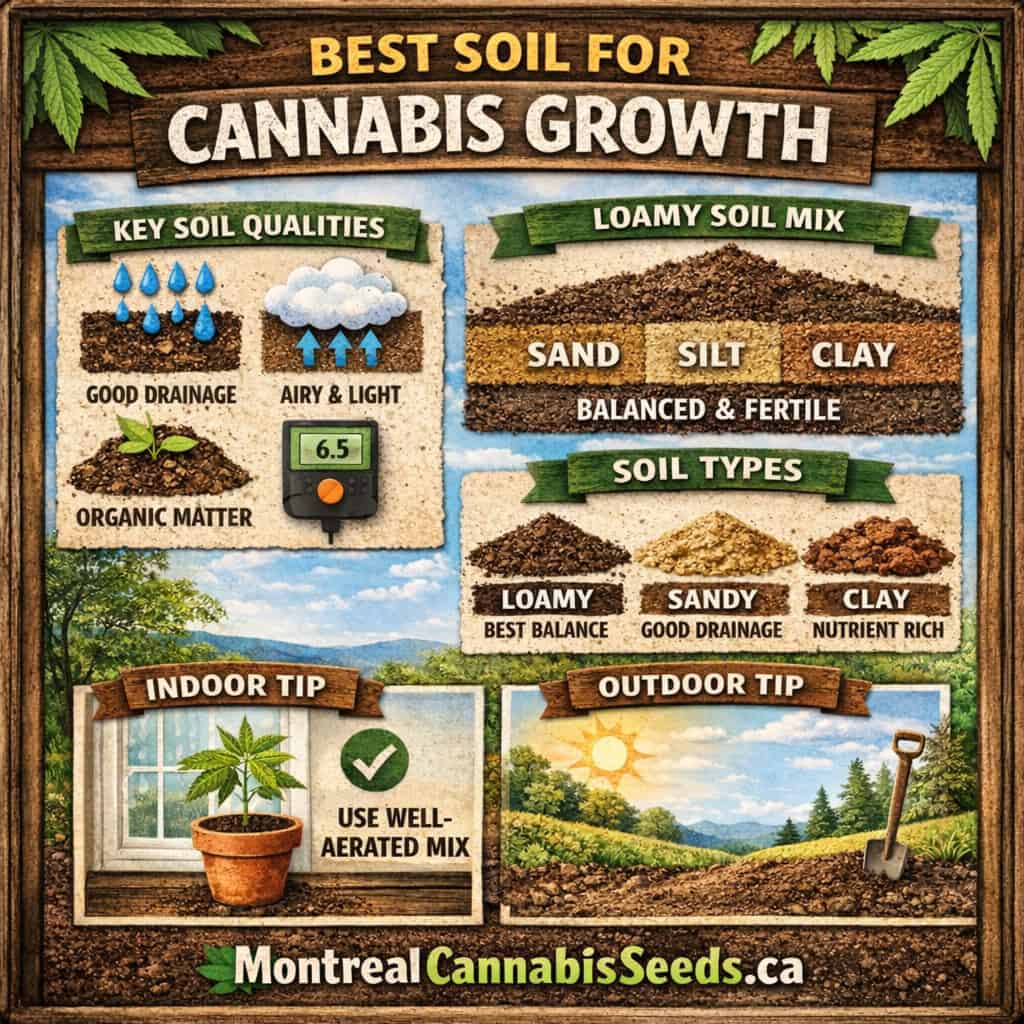
In general, cannabis grows best in a light, well-aerated, well-draining soil that also holds enough moisture to prevent constant dry-down. The sweet spot is often described as loamy soil—because it balances water retention, airflow, and nutrient exchange without becoming compacted.
- Texture: Loose and “crumbly,” not heavy or muddy
- Drainage: Water flows through without pooling
- Aeration: Roots get oxygen (critical for growth speed and resilience)
- Organic matter: Compost, worm castings, etc. for steady nutrition
- pH: Slightly acidic is typically preferred in soil grows
Why Loamy Soil Is Often Considered the Best
If you want a simple answer, it’s this: loamy soil is often the best all-around choice because it provides balance. Loam is a blend of sand, silt, and clay. That mix helps soil retain enough water and nutrients while still draining well and staying breathable.
For most growers, a “good cannabis soil” behaves like loam—even if you’re using a bagged potting mix. The goal is the same: roots can expand easily, moisture stays consistent, and nutrients don’t swing wildly.
Drainage & Aeration: The #1 Soil Mistake Growers Make
Dense, compact soil is one of the fastest ways to run into issues like slow growth, drooping, and root problems. Cannabis roots need oxygen. If your soil stays wet and heavy, oxygen gets squeezed out, and roots struggle.
Common Amendments That Improve Soil Structure
- Perlite: Increases drainage and adds air pockets
- Coco coir: Helps with moisture control and improves structure in blends
- Compost / worm castings: Adds organic matter and slow-release nutrition
- Vermiculite: Improves moisture retention (useful in drier environments)
Soil pH: Where Cannabis Roots Absorb Nutrients Best
Soil pH influences nutrient availability. If pH runs too high or too low, plants can show deficiency symptoms even when nutrients exist in the soil. Many soil growers aim for a slightly acidic range (often around the mid-6s) to support balanced nutrient uptake.
For troubleshooting nutrient-related symptoms, see: A Comprehensive Guide to Cannabis Deficiencies.
Soil Types: Pros & Cons for Cannabis
Loamy soil (best all-around)
- Balanced moisture retention and drainage
- Supports strong root growth
- More forgiving for beginners
Sandy soil (great aeration, less water retention)
- Drains fast and stays airy
- May require more frequent watering
- Often needs extra organic matter for nutrient holding
Clay-heavy soil (nutrient-rich but often too dense)
- Can hold nutrients well
- Often compacts, drains poorly, and limits oxygen
- Works best when amended to lighten structure
Nutrient Content: “Hot” Soil vs Gentle Seedling Soil
Some soils are nutrient-rich (“hot”), while others are mild and better for seedlings. Young plants usually prefer a gentler start. Overly strong soil can stress seedlings and slow early growth.
If you’re starting from seed, this guide pairs well with soil selection: The Ultimate Guide to Germinating Your Cannabis Seeds.
Indoor vs Outdoor Soil Considerations
Indoor grows
- Consistency matters—many growers use quality potting mixes for predictable results
- Drainage is critical in containers (avoid staying waterlogged)
- Overwatering is common—use a mix that breathes
Outdoor grows (Canada-specific reality check)
- Native soil varies a lot by region
- Adding organic matter and aeration can dramatically improve root health
- Weather swings make drainage and root oxygen even more important
For more growing reads, browse: Growing Cannabis (Blog Category).
Quick Checklist: The Best Soil Setup for Cannabis
- ✅ Light, airy structure (roots need oxygen)
- ✅ Reliable drainage (no soggy containers)
- ✅ Steady moisture retention (not bone-dry the next day)
- ✅ Organic matter for stable nutrition
- ✅ Soil pH kept in a healthy range for nutrient uptake
Final Thoughts
Cannabis grows best in soil that supports roots first: breathable structure, good drainage, stable moisture, and balanced nutrition. When your soil is right, everything else becomes easier—from early growth to long-term plant health.
Want to protect your seeds long-term? See: The Definitive Guide to Keeping Your Cannabis Seeds Fresh.
Legal Disclaimer: Cannabis laws vary by jurisdiction. It is the buyer’s responsibility to know and follow all local, provincial/state, and federal laws. These products are intended for adult customers (18+ or as required by law) where permitted. We do not encourage or promote any illegal activity.