


Seed Feminization: How Feminized Cannabis Seeds Are Made (The Real Science)
Feminized cannabis seeds exist for one simple reason: in most cultivation contexts, female plants are the ones growers want—they’re the ones that produce the resin-rich flowers. Instead of planting regular cannabis seeds (which can produce male or female plants), feminized seeds are bred so the resulting plants are overwhelmingly female.
If you want a quick primer on what feminized seeds are (and why they became so popular), you can also read: What Are Feminized Cannabis Seeds.
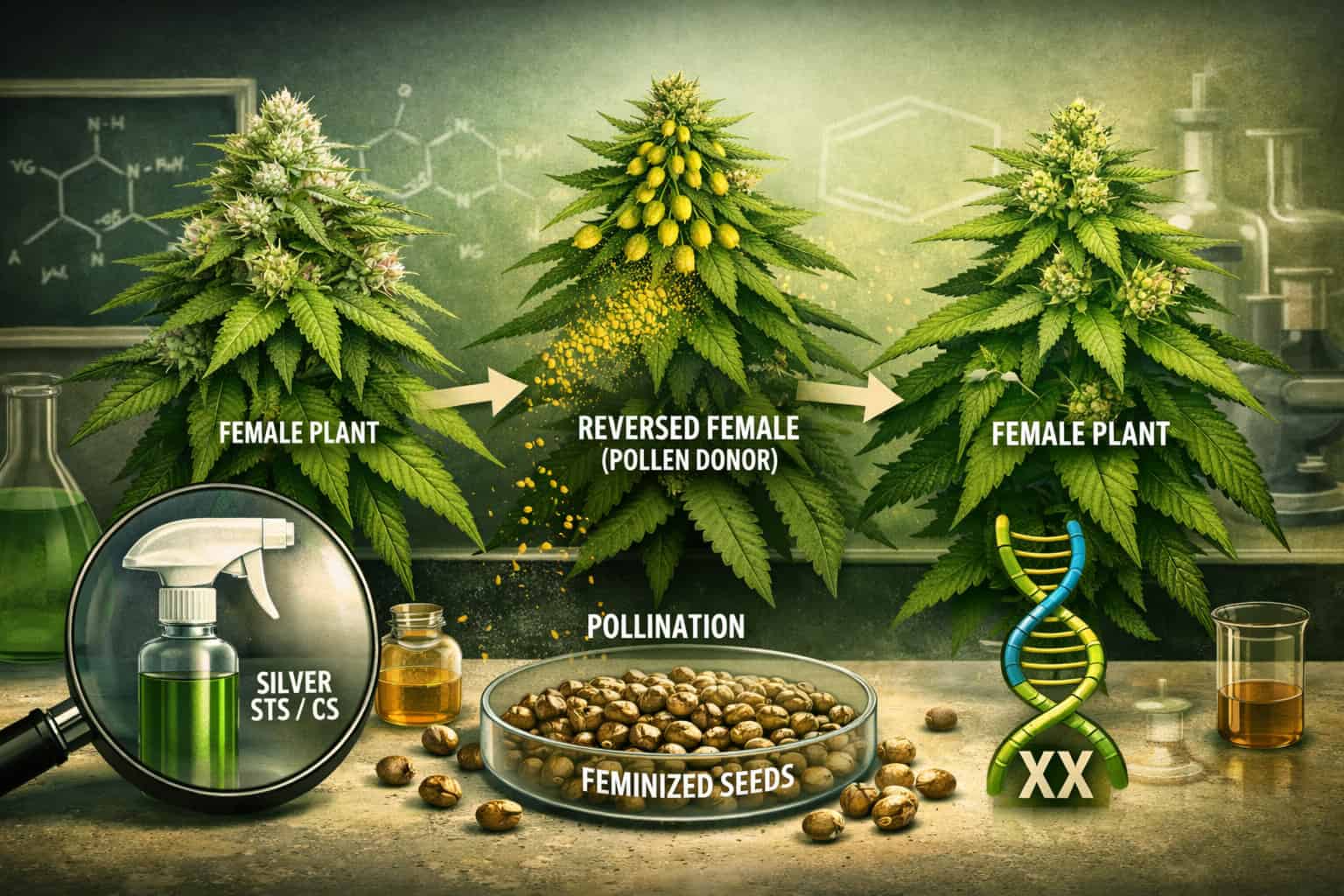
What feminized actually means and what it doesn’t
A feminized seed is bred to produce a female plant, not because it’s “genetically modified,” but because of how the parents were selected and crossed. Feminized does not automatically mean “stronger,” “more potent,” or “guaranteed perfect.”
Cannabis sex basics: why feminization is possible
Cannabis is usually dioecious, meaning male and female flowers typically occur on separate plants. But cannabis also has flexible sex expression: under certain conditions, plants can show sex reversal or develop intersex traits.
Ethylene matters
In many plants (including cannabis), ethylene signaling is linked to sex expression. In broad terms, reducing ethylene-related signaling can shift flower expression toward male structures—even on genetically female plants. That’s the doorway to producing “female pollen” (pollen created by a reversed female plant).
How seed feminization works high level
- Start with a stable female plant (or female line) selected for consistency.
- Induce pollen-producing flowers on that female plant (sex reversal).
- Use that pollen to pollinate a female plant (another female, or sometimes the same plant).
- The resulting seeds are female-biased (feminized) because the pollen donor is genetically female (XX).
If you’re comparing seed types more generally, this internal guide pairs well with this article: Feminized vs. Regular vs. Autoflowering Marijuana Seeds.
Common feminization methods breeders talk about
You’ll see a few approaches referenced in the industry. The big difference between them is reliability and control. This section is educational (what the terms mean), not a step-by-step “how-to.”
1) Silver thiosulfate (STS) sex reversal
STS is commonly discussed as an ethylene-inhibiting approach associated with consistent sex reversal in feminized seed production. It’s widely treated as a professional workflow due to handling and regulatory considerations.
2) Colloidal silver (CS) sex reversal
Colloidal silver is another frequently mentioned approach tied to ethylene-related pathways and sex reversal discussions. It’s often portrayed as more accessible than STS, but still requires careful handling and safety awareness.
3) Rodelization (stress-induced seed formation)
Rodelization is commonly described as allowing a late-cycle plant to express pollen structures under stress and then using that for seed creation. It’s often viewed as less predictable than more controlled approaches, with outcomes varying by genetics and selection standards.
Are feminized seeds more likely to herm?
The honest answer: it depends more on breeder selection and stress than the “feminized” label alone. Light leaks, heat swings, irregular cycles, and other stressors can trigger intersex traits in many lines. High-quality feminized lines are typically made by selecting against instability over multiple rounds.
Feminized seeds vs regular seeds: when each makes sense
Feminized seeds are ideal when:
- You want a straightforward run without sexing plants
- You’re limited on space and don’t want to cull males
- You’re focused on flower production consistency
Regular seeds can be better when:
- You’re doing serious breeding (you need true males)
- You want broader phenotypic variation for selection
- You’re building long-term breeding stock
What quality feminization looks like (shopping checklist)
- Breeder transparency
Clear claims, realistic expectations, and no “miracle seed” language. - Stability and selection emphasis
Look for evidence that the breeder selects against instability over time. - Practical grow education
Helpful resources are a trust signal—especially for basics like germination and storage:
Helpful internal links
- Growing Cannabis In Canada (Blog Category)
- Top Cannabis Strains for First-Time Growers
- A Comprehensive Guide to Cannabis Deficiencies
- Top 5 Mold-Resistant Strains for Successful Growing
- Are Autoflowering Seeds Always Female?
FAQ
Are feminized seeds “unnatural”?
Feminized seeds are produced through selective breeding and controlled pollination. The process leverages known plant biology around sex expression—without requiring genetic modification.
What does “S1 feminized” mean?
“S1” typically refers to a selfed generation (a plant pollinated with pollen derived from the same genotype). It can reinforce traits, but it also concentrates genetics—so selection quality matters.
Do feminized seeds change potency?
Not directly. Potency is shaped by genetics and environment. Feminization is primarily about sex expression and seed outcomes.
Legal Disclaimer: Cannabis laws vary by jurisdiction. It is the buyer’s responsibility to know and follow all local, provincial/state, and federal laws. These products are intended for adult customers (18+ or as required by law) where permitted. We do not encourage or promote any illegal activity.